
The Silent Shift: Blockchain Interoperability as a Catalyst for Future Institutional Governance
Interoperable blockchain systems could quietly reshape global governance, finance, and regulatory frameworks by enabling unprecedented coordination across national boundaries. This rarely highlighted technological governance weak signal may redefine multilateralism and capital flows over the next two decades.
As global institutions grapple with mounting complexity in governance and economic coordination, a largely underappreciated factor is emerging: the interoperability of distributed ledger technologies (DLTs). Beyond mere financial innovation, compatible blockchain networks could enable new forms of institutional collaboration, trust, and regulatory coherence at scale. This development could disrupt how international orgs manage cooperation, enforce rules, and allocate resources. Importantly, realizing this transformation depends heavily on legal frameworks and shared operational protocols, making it a governance innovation with broad cross-sector and geopolitical implications.
Signal Identification
This development qualifies as a weak signal with potential to evolve into a systemic inflection within 10–20 years. It remains under-discussed in strategic foresight yet presents high plausibility due to accelerating digital infrastructure investments and increasing demands on multilateral systems. Sectors most exposed include global finance, regulatory bodies, international development, and digital infrastructure governance. The signal’s core lies in blockchain interoperability — distinct from blockchain adoption alone — which enables independent systems to execute cross-border transactions and governance processes while maintaining distinct sovereignty and compliance requirements.
What Is Changing
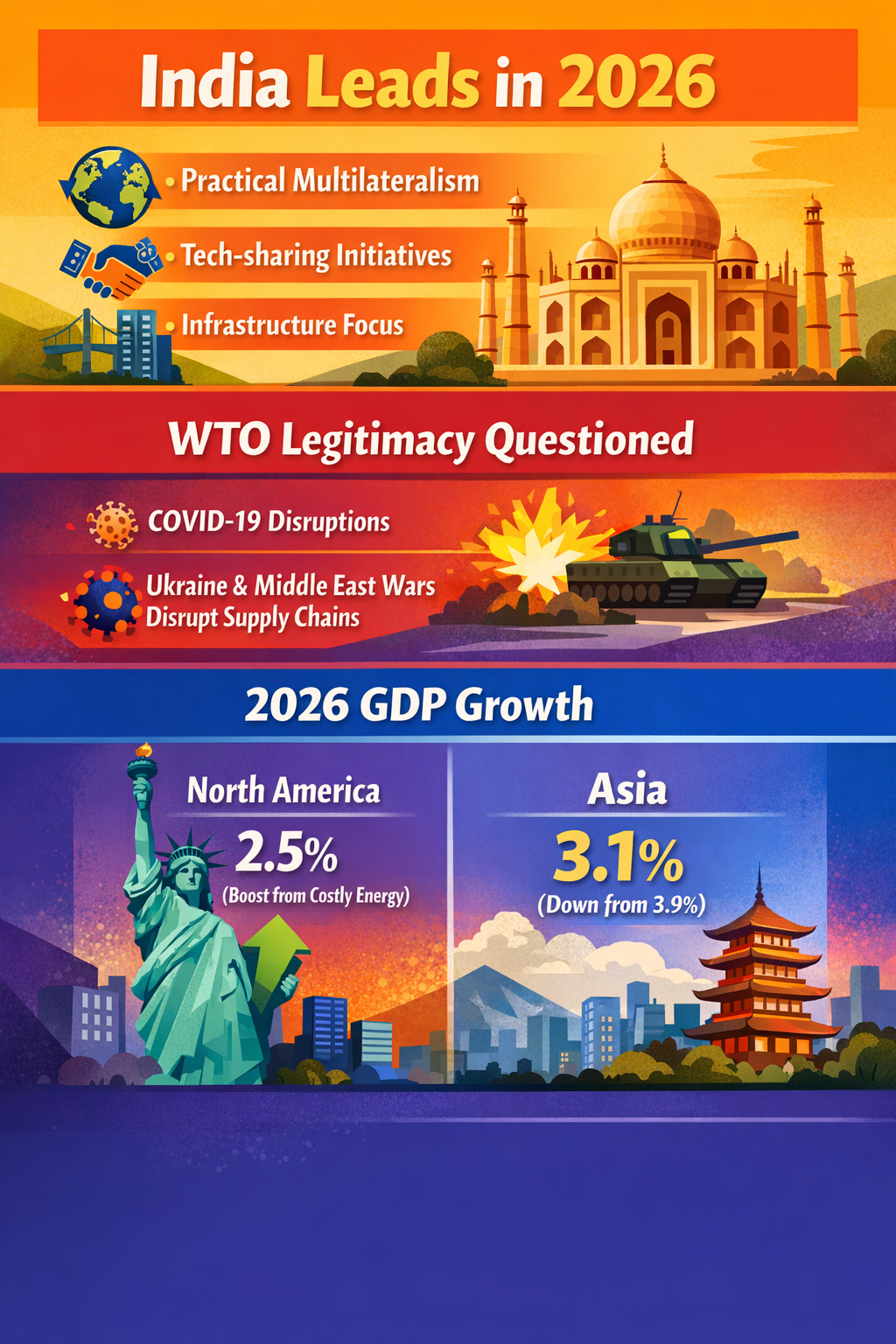
There is a discernible convergence of themes across recent analyses highlighting a shift towards “practical multilateralism” focused on operational cooperation rather than geopolitical rhetoric (Lukmaanias Blog 09/05/2026). This shift echoes in developing world leadership ambitions, as Group of Twenty presidencies push to redefine global financial and development rules (Atlantic Council 15/04/2026). Simultaneously, rising dissatisfaction with existing multilateralism—exemplified by Indonesia’s skepticism of ineffective frameworks (Southeast Asia Desk 13/03/2026)—pressures governance institutions towards new architectures.
Within this context, the technical potential of interoperable blockchain technologies emerges as a critical enabler. Unlike isolated blockchain implementations that emphasize transparency within siloed systems, interoperability creates a shared digital infrastructure that can underpin rule enforcement, data exchange, and finance with cryptographic trust assurances across jurisdictions (DevDiscourse 06/04/2026). This could streamline multinational regulatory cooperation, facilitate conditional capital allocation in international development, and support emerging multipolar leadership with practical tools rather than only diplomatic forums (UK Governors Statement 21/04/2026).
The Board of Peace’s legitimacy crisis, due to lack of inclusiveness and rule-based authority (Legacy IAS 23/01/2026), underscores systemic fractures in traditional multilateral mechanisms. Blockchain interoperability could offer means to rebuild legitimacy through transparent, auditable, and enforceable digital protocols embedded in governance processes, potentially reversing fragmentation trends.
Disruption Pathway
The pathway begins with the gradual adoption of interoperable blockchain nodes by states and international organizations seeking transparent, real-time collaboration tools for finance, compliance, and infrastructure development. This technical evolution will accelerate as critical mass builds around shared standards and legal frameworks enabling cross-border trust without ceding sovereignty.
Increased interoperability will stress legacy information silos, fragmented regulatory regimes, and bureaucratic processes that currently impede rapid decision-making and funding flows. These stresses may induce institutional reforms: codifying digital governance standards, embedding cryptographically secured compliance into development finance, and reallocating capital towards interoperable digital infrastructure projects.
As blockchain-enabled multilateral cooperation demonstrates efficiency gains, it may create positive feedback loops—attracting more participants, catalyzing innovations in legal interoperability, and reinforcing inclusive digital governance norms. This dynamic risks destabilizing entities that rely on opaque, nation-centric controls, incentivizing further decentralization of traditional governance.
Over time, dominant governance and regulatory models could shift from analog treaty-based arrangements to digitally automatable rule enforcement systems, integrating data-driven accountability mechanisms. Industrial structures in finance, project development, and regulation might reorganize around interoperable blockchain platforms that align incentives and operations across geopolitical divides, thus redefining strategic positioning of governments and multinational corporations alike.
Why This Matters
From a capital allocation perspective, investors may increasingly prioritise projects and jurisdictions demonstrating blockchain interoperability compliance, seeing it as a governance and risk mitigation signal. Regulatory frameworks could pivot to mandate or incentivize interoperable blockchain standards as conditions for cross-border activity participation or funding eligibility.
For industrial strategy, actors integrating interoperability capabilities early may gain competitive edges in efficiency and legitimacy, especially in international development and cross-border trade finance sectors. Supply chains dependent on multi-jurisdictional cooperation could streamline verification and compliance, reducing costs and liabilities associated with transnational operations.
From a governance standpoint, interoperable blockchain systems may redistribute authority by enabling participation beyond traditional nation-state actors, creating hybrid institutional forms mandating new regulatory oversight and liability frameworks. Senior decision-makers must therefore anticipate shifts in governance legitimacy, enforcement modalities, and strategic partnerships driven by this emergent digital infrastructure.
Implications
This signal could plausibly induce structural changes in multilateral governance paradigms rather than representing transient technological hype. It may standardize cooperation mechanisms, diminishing the friction and exclusivity associated with traditional treaty-based diplomacy and fragmented systems. However, this transition might also encounter competing interpretations—some may argue that blockchain’s political and legal adoption barriers limit scaling, or that geopolitical rivalries override technical interoperability potentials.
The development should not be mistaken for simple blockchain adoption or fintech disruption alone; its unique systemic impact lies in enabling inter-institutional interoperability that could underpin novel rules-based global governance. That said, if countries fail to agree on compatible legal and operational frameworks, the signal could stall or fragment, reinforcing existing governance inefficiencies.
Early Indicators to Monitor
- Formation and international adoption of interoperability standards and protocols by blockchain consortia and standard bodies
- Legal frameworks or regulatory drafts explicitly addressing cross-jurisdictional blockchain governance
- Multilateral institutions deploying blockchain interoperability pilots for transparency or fund disbursement
- Venture capital clustering in cross-chain interoperability projects with governmental or institutional contracts
- Capital reallocations favoring interoperable digital infrastructure investments over siloed blockchain solutions
Disconfirming Signals
- Widespread failure to reach consensus on international legal frameworks governing blockchain interoperability
- Geopolitical escalations reinforcing digital “splinternet” fragmentation instead of integration
- Emergence of nascent governance institutions that reject technological standards in favor of traditional mechanisms
- Material technical barriers or security vulnerabilities undermining cross-chain transaction trust
- Significant backlash or regulatory crackdowns on blockchain systems hindering multi-jurisdictional collaboration
Strategic Questions
- How should regulatory frameworks adapt to incentivize or mandate blockchain interoperability as a condition for multilateral cooperation and financing?
- What capital allocation shifts should be anticipated as interoperable blockchain governance models emerge, and how can early movers capitalize on these trends?
Keywords
Blockchain Interoperability; Multilateral Governance; Distributed Ledger Technology; International Regulatory Frameworks; Capital Allocation; Digital Infrastructure; Global Finance
Bibliography
- With India taking the helm in 2026, the world expects a shift toward Practical Multilateralism - focusing on tech-sharing and infrastructure rather than just geopolitical posturing. Lukmaanias Blog. Published 09/05/2026.
- Interoperable distributed ledger systems could potentially strengthen global governance efficiency, but only if countries establish compatible legal frameworks and shared operational standards. DevDiscourse. Published 06/04/2026.
- The IMF will need to keep evolving to help its members navigate the increasingly uncertain global context and demonstrate the continued value of multilateralism to address shared global economic challenges. UK Governors Statement. Published 21/04/2026.
- There is an opportunity to redefine the rules that have thus far governed the world, including the rules of finance, development, and multilateralism-building off South Africa's Group of Twenty presidency. Atlantic Council. Published 15/04/2026.
- The Board of Peace reflects growing stress on post-war multilateralism, but without legitimacy, inclusiveness, and rule-based authority, it risks deepening fragmentation rather than delivering durable peace. Legacy IAS. Published 23/01/2026.
- Indonesia will not entrust its national interests to a multilateralism that does not work. Southeast Asia Desk. Published 13/03/2026.