
The Emerging Disruption of Real-World Asset Tokenization by 2030
As blockchain technology evolves, the tokenization of real-world assets is gaining traction as a weak signal with the potential to disrupt financial markets, institutional investing, and sovereign treasuries over the next decade. This innovation extends beyond cryptocurrencies, integrating tangible assets into digital ecosystems and redefining ownership, liquidity, and regulatory oversight. Not widely understood, its rising momentum could transform how value is represented, transferred, and regulated globally.
What’s Changing?
Asset tokenization refers to converting ownership rights of physical or financial assets—such as real estate, commodities, or securities—into digital tokens on a blockchain. This development is moving beyond proof of concept into real-world application, driven by technologies that offer programmability, transparency, and interoperability across financial systems.
By 2030, tokenized real-world assets may unlock an estimated $500 billion in addressable value in regions like the Gulf Cooperation Council alone, illustrating the scale of economic transformation anticipated (Consultancy ME). This surge is supported by growing integration between decentralized finance (DeFi) protocols and traditional finance, blurring historical boundaries between these worlds.
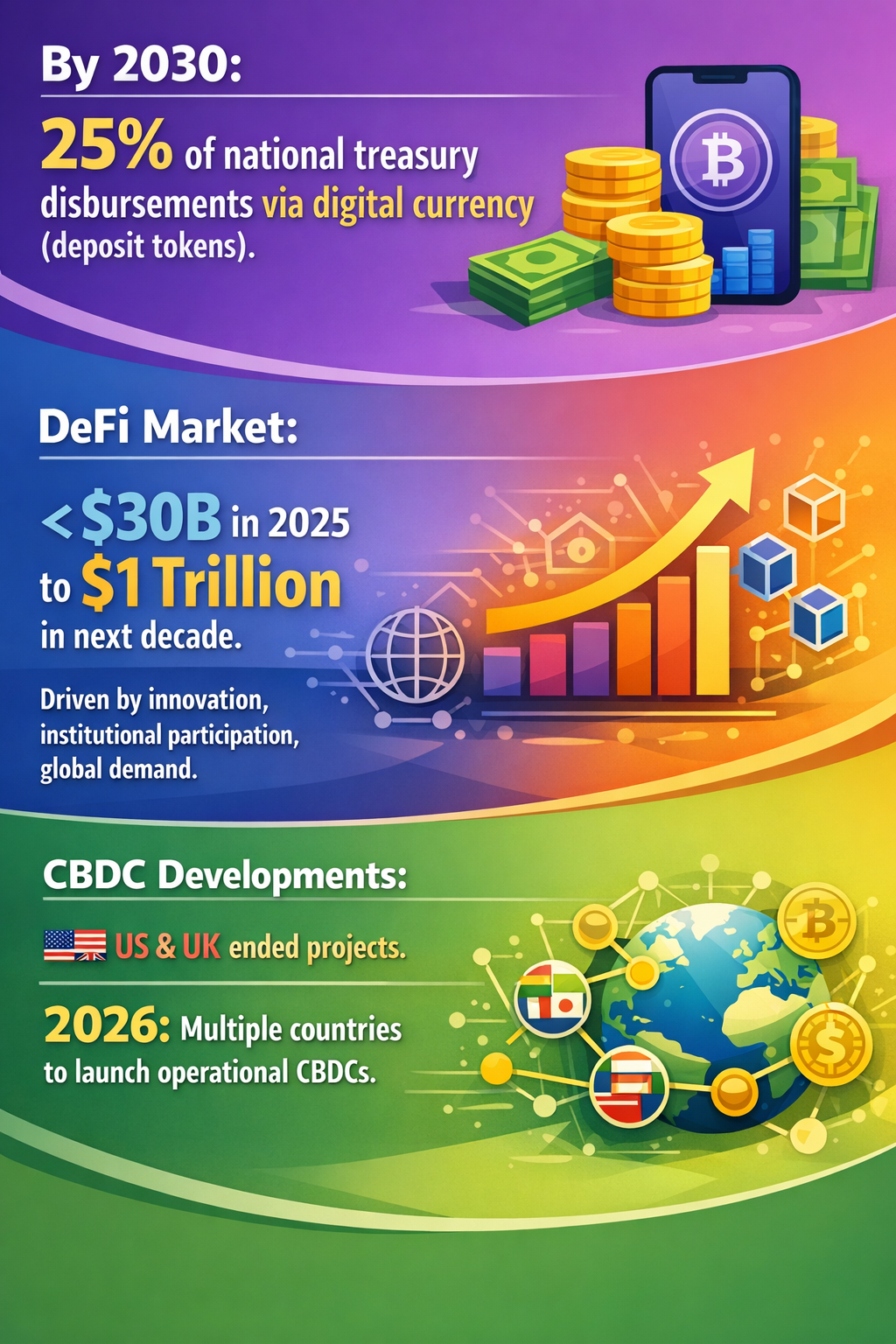
Multiple countries expect to launch fully operational Central Bank Digital Currencies (CBDCs) by 2026, enabling national treasuries to execute up to one-quarter of their disbursements in digital currencies, including deposit tokens that could represent tokenized assets directly controllable by sovereign entities (Finextra; BeinCrypto). This governmental adoption provides a regulatory foundation that could accelerate institutional trust and market stability for tokenized offerings.
The complexity of decentralized finance protocols is increasing exponentially, often creating unforeseen vulnerabilities driven by layered interoperability. However, this enhanced complexity also facilitates more sophisticated asset digitization and cross-platform transactions, making tokenized assets not only more versatile but potentially more integrated into global financial architecture (DigitalBytes).
Bank of America’s forecast projects a rise in institutional adoption of digital assets, including stablecoins and tokenized securities, which may boost liquidity and widen market access (Bitget). Moreover, the GENIUS Act in the United States stands to elevate stablecoins as a supportive tool for the dollar as a global reserve currency by expanding access to the dollar economy and increasing demand for US Treasuries (Euronews).
These developments illustrate a layered ecosystem where tokenized assets interact with mainstream finance through a mix of private initiatives, regulatory shifts, and governmental digital currency mechanisms. The result is a potentially transformative scenario that could overhaul how value is mobilized and how financial instruments are structured and regulated globally.
Why is this Important?
The digitization of real-world assets changes fundamental concepts of ownership by embedding assets into programmable, transparent digital contracts. This could reduce transaction costs, improve settlement times from days to seconds, and lower barriers to market participation by fractionalizing ownership. Investors might gain access to asset classes that were previously illiquid or geographically constrained.
The integration with CBDCs and stablecoins enhances the credibility of these digital tokens. Public-sector endorsement may reduce volatility traditionally associated with cryptocurrencies, enabling wider institutional and retail adoption. Additionally, regulatory frameworks influenced by government-backed digital currencies could provide clarity and safety, encouraging innovation while managing systemic risks.
For governments, tokenized assets represent new avenues for fiscal policy and treasury management. Tokenization could streamline disbursements, increase traceability of public funds, and facilitate new forms of capital raising, including asset-backed securities on blockchain platforms. This may improve transparency and reduce inefficiencies in sovereign finance.
Industries reliant on asset financing, such as real estate, infrastructure, and commodities, could experience structural shifts in liquidity and ownership models. The potential for 24/7 markets and near-instantaneous cross-border transferability broadens the reach and dynamism of these sectors, requiring adjustments in legal, accounting, and operational frameworks.
Implications
Businesses and financial institutions should anticipate a gradual but accelerating shift toward interoperable digital asset ecosystems that blend traditional finance with DeFi elements. This will entail:
- Investing in blockchain literacy and infrastructure to engage with tokenized assets effectively.
- Monitoring regulatory developments, especially regarding CBDCs and stablecoins, to align compliance and innovation strategies.
- Developing partnerships across sectors to capitalize on fractional ownership and new liquidity pools.
- Reassessing risk profiles and governance models to address the complexity arising from multi-layered blockchain protocols.
Governments should consider how to leverage tokenization for fiscal efficiency while managing systemic and cybersecurity risks associated with increased digital asset velocity.
For investors, tokenized assets could democratize access but also introduce new volatility and counterparty risk. Understanding smart contract vulnerabilities and interoperability challenges will be critical for informed decision-making.
Academics and research institutions have opportunities to study the cross-sectoral impact of tokenization on economic inclusivity, financial stability, and regulatory effectiveness, contributing data-driven insights to guide policy and innovation.
Questions
- How will regulatory frameworks evolve to govern ownership, transfer, and taxation of tokenized real-world assets consistently across jurisdictions?
- What are the operational risks created by the increasing complexity of interoperable DeFi protocols underpinning tokenization, and how can these be mitigated?
- To what extent will the adoption of CBDCs accelerate institutional acceptance of tokenized assets, and how might this impact global financial power dynamics?
- How can businesses prepare for integration of tokenized assets into traditional supply chains, financing structures, and capital markets?
- What new financial products and services might emerge as tokenization lowers entry barriers for fractional ownership and liquidity?
- How will increased transparency from tokenization affect privacy concerns and competitive intelligence in heavily regulated sectors?
Keywords
real world asset tokenization; decentralized finance; central bank digital currency; stablecoins; blockchain interoperability; digital currency treasury disbursements
Bibliography
- Real-world asset tokenization: A $500 billion market opportunity for the GCC. Consultancy ME. https://www.consultancy-me.com/news/12583/real-world-asset-tokenization-a-500-billion-market-opportunity-for-the-gcc
- Blockchain and crypto trends in 2026: Bridging the gap between TradFi and DeFi. Finextra. https://www.finextra.com/blogposting/30699/blockchain-and-crypto-trends-in-2026-bridging-the-gap-between-tradfi-and-defi
- By 2030, one-quarter of all national treasury disbursements will be executed using digital currency, specifically deposit tokens. BeinCrypto. https://beincrypto.com/korea-stablecoin-laws-in-q1-allow-crypto-etfs/
- Why 2026 financial systems must plan for DeFi complexity. DigitalBytes. https://digitalbytes.substack.com/p/why-2026-financial-systems-must-plan
- If Bank of America’s forecast comes true, institutional adoption and liquidity could surge. Bitget. https://www.bitget.com/amp/news/detail/12560605157291
- Stablecoins growing but how are governments responding? Euronews. https://www.euronews.com/business/2026/01/17/stablecoins-are-growing-but-how-are-governments-responding