
The Emerging Role of SyNTase and AI-Driven Gene Editing Platforms in Biotech’s Future
Gene editing technologies, especially CRISPR-based platforms, continue to evolve rapidly, holding transformative potential for healthcare, agriculture, and environmental conservation. Among recent developments, the intersection of novel gene editing tools such as SyNTase with artificial intelligence (AI) for assay design and interpretation is surfacing as a weak signal that could disrupt traditional biotechnology industries. This convergence suggests a future where precision, scalability, and integration of gene editing could reshape therapeutic pipelines, biotech investment strategies, and regulatory frameworks, with implications reaching across multiple sectors.
What's Changing?
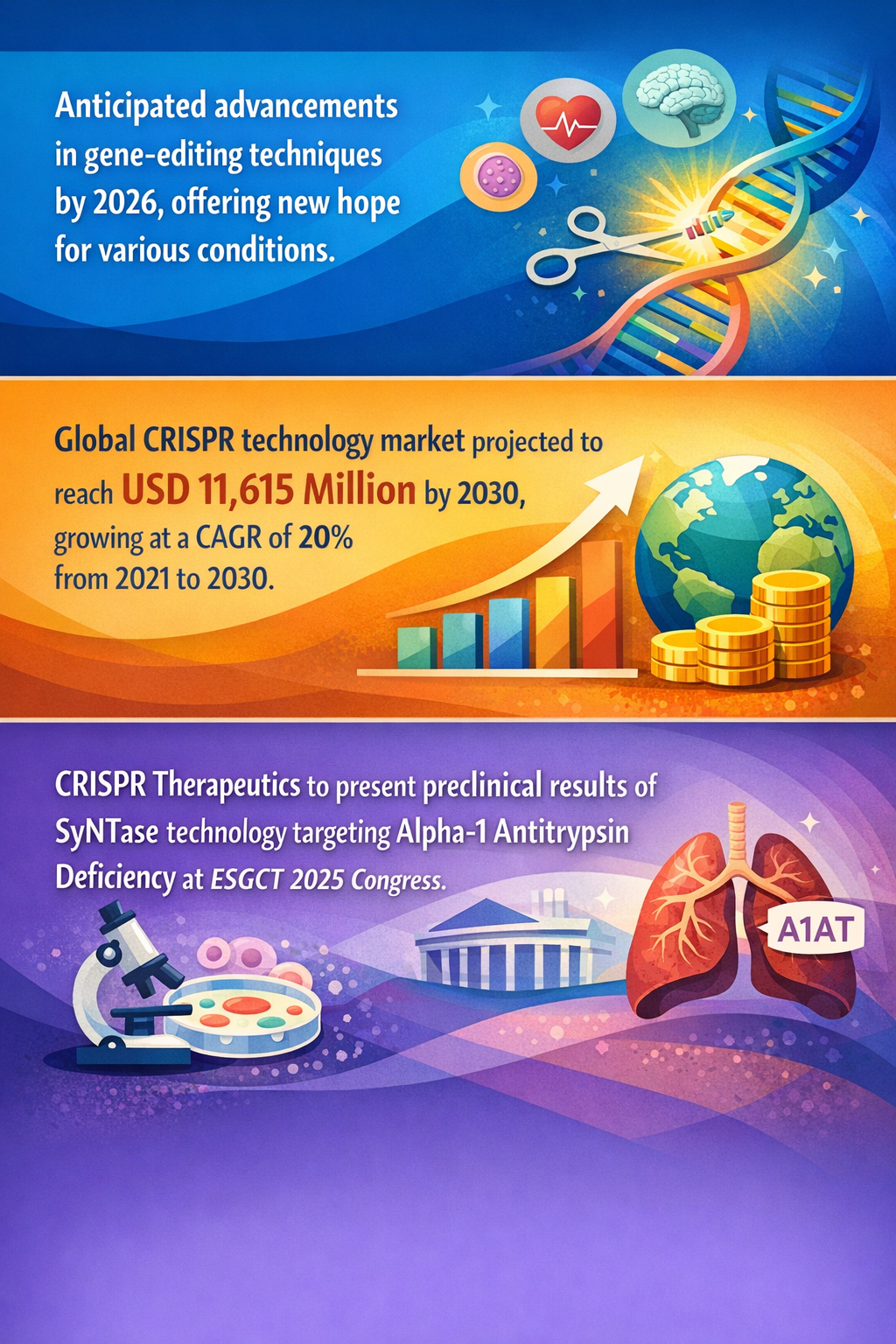
Gene editing technology is advancing beyond baseline CRISPR methods into more specialized, efficient, and targeted approaches. For instance, CRISPR Therapeutics recently announced the novel SyNTase gene editing technology, which will be featured at the ESGCT 2025 Congress with promising preclinical results targeting Alpha-1 Antitrypsin Deficiency, a hereditary liver and lung condition (CRISPR Therapeutics, 2025). SyNTase represents an evolution in editing precision, potentially allowing for higher efficiency and fewer off-target effects. This is indicative of a broader shift toward refinement and diversification of gene editing tools.
Further, the biotech ecosystem, particularly in emerging markets like India, is witnessing a unique fusion of gene editing with AI-based assay design and data interpretation platforms (Tech Startups, 2025). This combination aims to optimize the development process by enabling automated, high-throughput screening of gene edits and rapid analysis of biological outcomes. The creation of defensible intellectual property (IP) moats through this integrative approach could generate recurring revenue streams from proprietary test panels, altering the competitive landscape significantly.
By 2026, gene editing applications are expected to expand into a wider array of therapeutic targets beyond rare genetic diseases, encompassing broader chronic conditions and personalized medicine (IPv6.net, 2026). As technologies improve, therapies moving from trial to clinical approval—such as CRISPR-based treatments for sickle cell disease targeted for approval by 2025—may spark an expanded gene-edited cell therapy market with increased employment in biotech sectors (Intuition Labs, 2025).
Meanwhile, regulatory and societal dynamics are also in flux. For example, international bodies like the International Union for Conservation of Nature (IUCN) have considered moratoria on synthetic biology applications, including gene editing in wildlife, though such measures have no firm legal force (New Scientist, 2025). Nonetheless, these governance discussions highlight emerging ethical and legal uncertainties that companies must navigate as gene editing applications broaden into environmental and ecological contexts.
Why is this Important?
The integration of advanced gene editing platforms like SyNTase with AI tools represents a strategic inflection point. Precision editing combined with machine learning-driven experimentation could shorten development cycles, reduce costs, and increase success rates of gene-based therapies. This might lower barriers for smaller companies and new entrants, intensifying competition and accelerating innovation.
Industrial disruption is likely in not only healthcare but also agriculture and environmental management, where gene editing could address challenges such as crop resilience and species conservation. However, the technology’s spread also magnifies regulatory, ethical, and public acceptance concerns. These issues may provoke variable policy responses globally, affecting market access and corporate strategies.
Investors could see shifts in biotech capital allocation toward companies with integrated gene editing-AI platforms capable of generating continuous IP and data assets. The emergent trend can also impact workforce demand, emphasizing multidisciplinary expertise at the interface of AI, genetics, and bioinformatics.
Implications
Businesses and governments must prepare for diverse ripple effects from this evolving landscape:
- Rethinking R&D Models: Gene editing combined with AI-enabled assay design could require restructuring of research pipelines, with heightened emphasis on data integration, cross-disciplinary teams, and flexible trial designs.
- Intellectual Property Strategies: Companies might increasingly pursue layered IP approaches around both gene editing tools and AI algorithms, demanding vigilant management of legal frameworks and partnerships.
- Regulatory Navigation: Anticipating divergent international regulations concerning gene editing applications will be critical, necessitating early engagement with policymakers and ethical review bodies.
- Diverse Sector Impact: Beyond healthcare, agriculture, and environmental uses of gene editing will pose new challenges and opportunities in ecosystem management, food security, and bioethics.
- Investment and Workforce Development: Capital allocation may favor ventures combining AI and gene editing, and talent pipelines need to support hybrid skills spanning biotechnology and data science.
Strategic planners in biotech companies, governments overseeing public health and environmental policy, and investors will need to monitor these weak signals closely. Preparedness to pivot based on how these integrations mature could define future competitive advantage.
Questions
- How might the convergence of gene editing and AI platforms redefine intellectual property landscapes in biotech and related sectors?
- What regulatory frameworks could evolve to address the ethical and safety dimensions of expanded gene editing applications, especially in environmental contexts?
- How could gene editing coupled with AI impact global health disparities if access and affordability remain uneven?
- What cross-sector collaborations might this trend enable or require, particularly between healthcare, agriculture, and environmental management stakeholders?
- Which new competencies will become critical for the workforce as multidisciplinarity intensifies within gene editing innovation?
Keywords
SyNTase; CRISPR; gene editing; artificial intelligence; biotechnology; precision medicine; intellectual property; regulatory frameworks; synthetic biology
Bibliography
- An IUCN moratorium on synthetic biology would have no legal force, but it could still have far-reaching effects. (New Scientist)
- CRISPR Therapeutics recently announced that its novel SyNTase gene editing technology will be featured in an oral presentation at the ESGCT 2025 Congress, showcasing preclinical results targeting Alpha-1 Antitrypsin Deficiency with high efficiency and precision. (SahmCapital)
- By 2026, we anticipate seeing more refined gene-editing techniques being explored for a wider array of conditions, offering new hope for patients and their families. (IPv6.net)
- India's biotech ecosystem has been gaining momentum as investors look beyond pure software plays; combining CRISPR platforms with AI-based assay design and result interpretation could create defensible IP moats and recurring revenue from test panels. (Tech Startups)
- The recent breakthrough in gene editing (CRISPR) being used in a clinical trial for sickle cell (potentially to be approved by 2025) could spawn an era of gene-edited cell therapies, leading to more jobs in CRISPR-based therapy development. (Intuition Labs)