
The Emerging Fragmentation of Global Trade Governance and Its Disruptive Potential
Global trade governance faces a growing fragmentation as multilateralism weakens and states increasingly prioritize transactional, bilateral, or bloc-based arrangements. This shift, currently modest but accelerating, constitutes a weak signal with the potential to disrupt international trade, geopolitical alignments, and economic development pathways over the next two decades. Understanding the nuances and consequences of this evolving fragmentation will be crucial for businesses, governments, and organizations that rely on predictable global trading systems.
What's Changing?
Recent developments indicate a marked departure from the established multilateral trade system that shaped global economic relations for decades. The United States stands at the center of this shift. Under the Trump administration, trade policies became increasingly transactional and protectionist, characterized by tariffs and bilateral negotiations rather than engagement through institutions such as the World Trade Organization (WTO). This trend has persisted, revealing a fundamental challenge to the principles underpinning multilateral trade (Americas Quarterly).
Latin America exemplifies how regional actors must rethink their role amid such fragmentation. Traditional reliance on rules-based multilateralism appears less viable, compelling countries to forge new partnerships and trade mechanisms focused on transactional benefits and regional priorities. This reorientation carries implications for supply chain configurations, investment flows, and diplomatic alignments (Americas Quarterly).
Simultaneously, emerging economic powers have begun to shape alternative trade and governance frameworks. BRICS nations, for instance, have endorsed a vision that emphasizes multipolarity, sustainable development, and direct economic cooperation, while questioning the efficacy and equity of current multilateral institutions. Indonesia, leveraging the BRICS New Development Bank and wider economic diplomacy, typifies this approach, projecting a pragmatic yet competitive stance toward the global order (Valdai Club; Antara News).
The withdrawal or inconsistent engagement of the U.S. in global governance has created leadership vacuums. Russia and China’s disengagement from some BRICS forums signals possible waning of coherence even within blocs designed to counterbalance Western dominance. The lack of a clear leadership transition heightens the risk of fragmented governance driven by power politics rather than inclusive norms (The Guardian).
Environmental policy further reveals strains in multilateralism. Climate negotiations risk devolving into ineffective agreements if fossil-fuel interests dilute commitments, signaling a breakdown in global consensus building. This weak signal foreshadows how fractured governance models may undermine collective action in critical global challenges beyond trade (Insights on India).
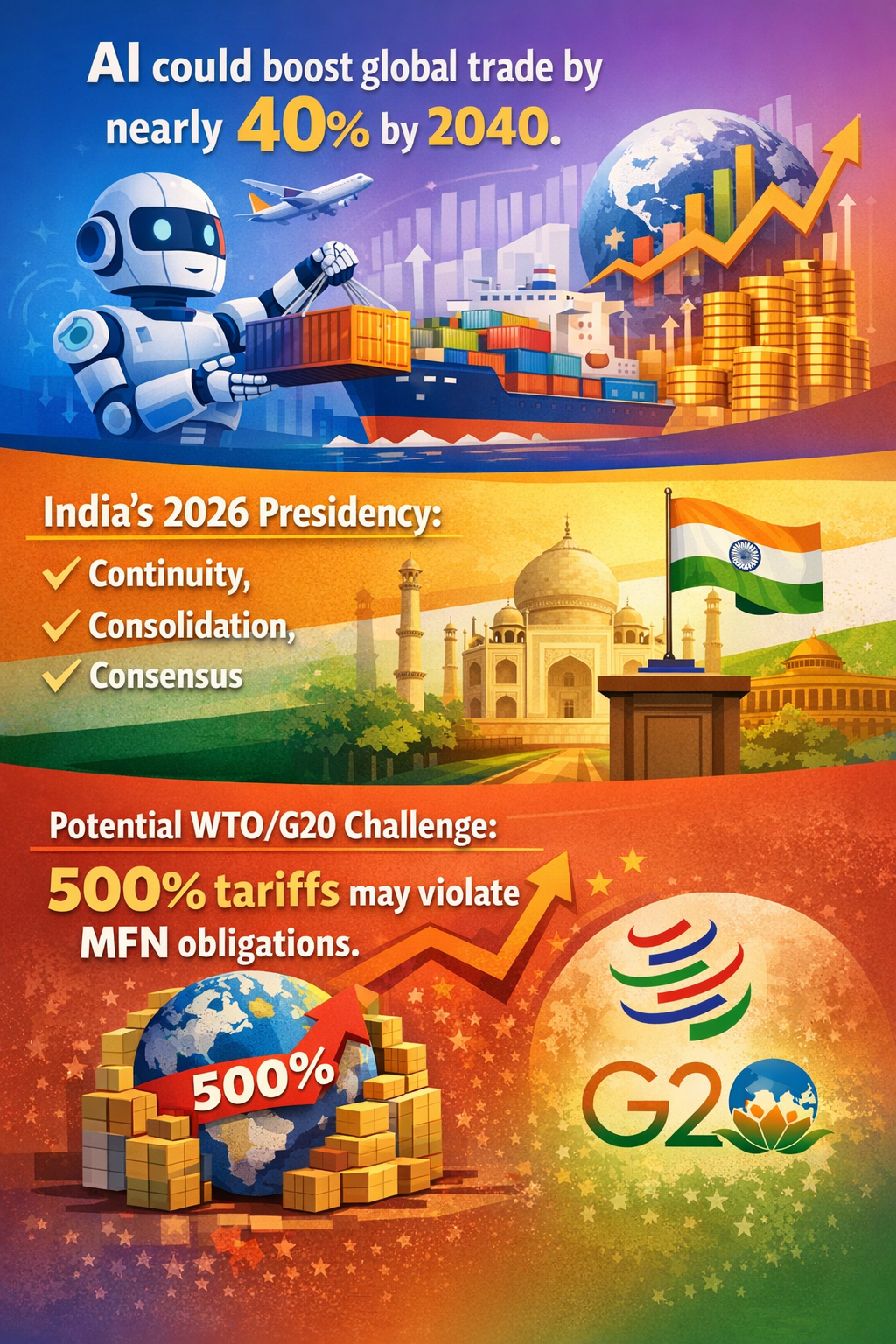
Technological shifts underscore the changing dynamics as well. The WTO predicts that artificial intelligence (AI) could boost global goods and services trade by nearly 40% by 2040. Yet, the deployment of AI-driven trade facilitation tools may accentuate disparities if governance architectures fail to adapt inclusively, favoring technologically advanced actors and potentially accelerating fragmentation (Economic Times India).
Why is this Important?
The fragility and fragmentation of multilateral trade governance pose several critical consequences. First, the shift from a rules-based, inclusive system toward transactional or bloc-centric trade arrangements raises costs and uncertainties for international businesses. Predictable tariff schedules, dispute resolution mechanisms, and internationally accepted norms help mitigate risks; erosion of these frameworks may increase regulatory complexity and barriers to entry.
Second, fragmentation may perpetuate geopolitical rivalries, as states harness trade tools for strategic advantage instead of mutual development. The vacuum left by the U.S.’s retreat and lack of a unifying global leader could lead to fragmented governance that privileges power dynamics over consensus and fairness. Regional and emerging blocs might push competing rules and standards, complicating global interoperability.
Third, developing nations face both risks and opportunities. Reduced support for multilateral institutions could limit access to dispute mechanisms and financing, disadvantaging weaker economies. Conversely, new institutions such as the BRICS New Development Bank may offer alternative financing paths and partnerships, which could recalibrate global development patterns, albeit with different priorities and criteria.
Finally, a fragmented trade ecosystem that fails to address collective challenges like climate change may stall global progress. Weak multilateral coordination on environmental regulations and sustainable trade threatens to lock in carbon-intensive practices and exacerbate inequalities.
Implications
Businesses operating in this increasingly fragmented landscape will need to rethink strategies on supply chain resilience, market entry, and regulatory compliance. Diversifying partners beyond traditional blocs and enhancing trade intelligence capabilities to navigate emerging regional rules may become essential. Companies could leverage AI and data analytics to forecast regulatory shifts and adapt quickly.
Governments must balance national interests with the broader benefits of cooperation. Investment in diplomatic efforts to reform multilateral institutions rather than abandoning them could mitigate fragmentation. Emerging powers may need to lead inclusive, pragmatic reforms advancing both multipolar cooperation and respect for shared global goods.
Trade bodies and multilateral institutions should integrate technological innovation while ensuring equitable digital inclusion. This means establishing AI-enabled systems that facilitate trade for diverse economies, prevent discriminatory practices, and foster transparency and accountability.
Sectoral stakeholders engaged in climate-sensitive trade must anticipate the consequences of weakened multilateral environmental commitments. Developing coherent national and regional policies aligned with sustainable development may mitigate risks of regulatory fragmentation.
Strategic foresight efforts should monitor this weak signal closely. Scenario planning that incorporates fragmented governance models, emergent regional standards, and AI-enabled trade dynamics would help organizations pre-empt disruptions and position for resilience and influence.
Questions
- How might organizations map and monitor emerging regional trade blocs and their regulatory standards effectively?
- What governance reforms could enhance the legitimacy and stability of multilateral trade systems in response to leadership vacuums?
- How can AI and digital trade facilitation be harnessed to support inclusive and transparent global trade governance?
- What contingency plans should governments and businesses develop for a future marked by fragmented governance and competing trade regimes?
- How can trade and environmental policies be better aligned to prevent climate governance breakdowns linked to fragmented multilateralism?
- Which emerging partnerships outside traditional blocs could provide alternative opportunities or risks?
Keywords
trade fragmentation; multilateralism; BRICS; global governance; artificial intelligence trade; trade bloc; supply chain resilience; environmental governance
Bibliography
- How U.S. Tariffs Are Rewiring Latin American Trade. Americas Quarterly. https://www.americasquarterly.org/article/how-u-s-tariffs-are-rewiring-latin-american-trade/
- Trump in the Middle East Risks Fragmenting Global Governance. Manara Magazine. https://manaramagazine.org/2026/02/trump-in-the-middle-east/
- Risk of Nuclear Proliferation 2026: Leadership Void in Nonproliferation. Just Security. https://www.justsecurity.org/129480/risk-nuclear-proliferation-2026/
- Indonesia and BRICS: Developing Challenges for Multipolarity. Valdai Club. https://valdaiclub.com/a/highlights/indonesia-and-brics-developing-challenges/
- Indonesia Pledges To Stay in Multilateral System While Pushing Reform. Antara News. https://en.antaranews.com/news/399857/indonesia-pledges-to-stay-in-multilateral-system-while-pushing-reform
- Leaders of Russia and China Snub BRICS Summit. The Guardian. https://www.theguardian.com/business/2025/jul/05/leaders-of-russia-and-china-snub-brics-summit-in-sign-groups-value-may-be-waning
- UpSC Current Affairs: Breakdown of Climate Multilateralism. Insights on India. https://www.insightsonindia.com/2025/11/22/upsc-current-affairs-22-november-2025/
- AI Use Can Boost Global Trade 40% by 2040, WTO Says. Economic Times India. https://economictimes.indiatimes.com/news/international/business/ai-use-can-boost-global-trade-by-around-40-by-2040-gdp-by-12-13-wto/articleshow/123950264.cms?from=mdr